Is Something Bigger Than Me?
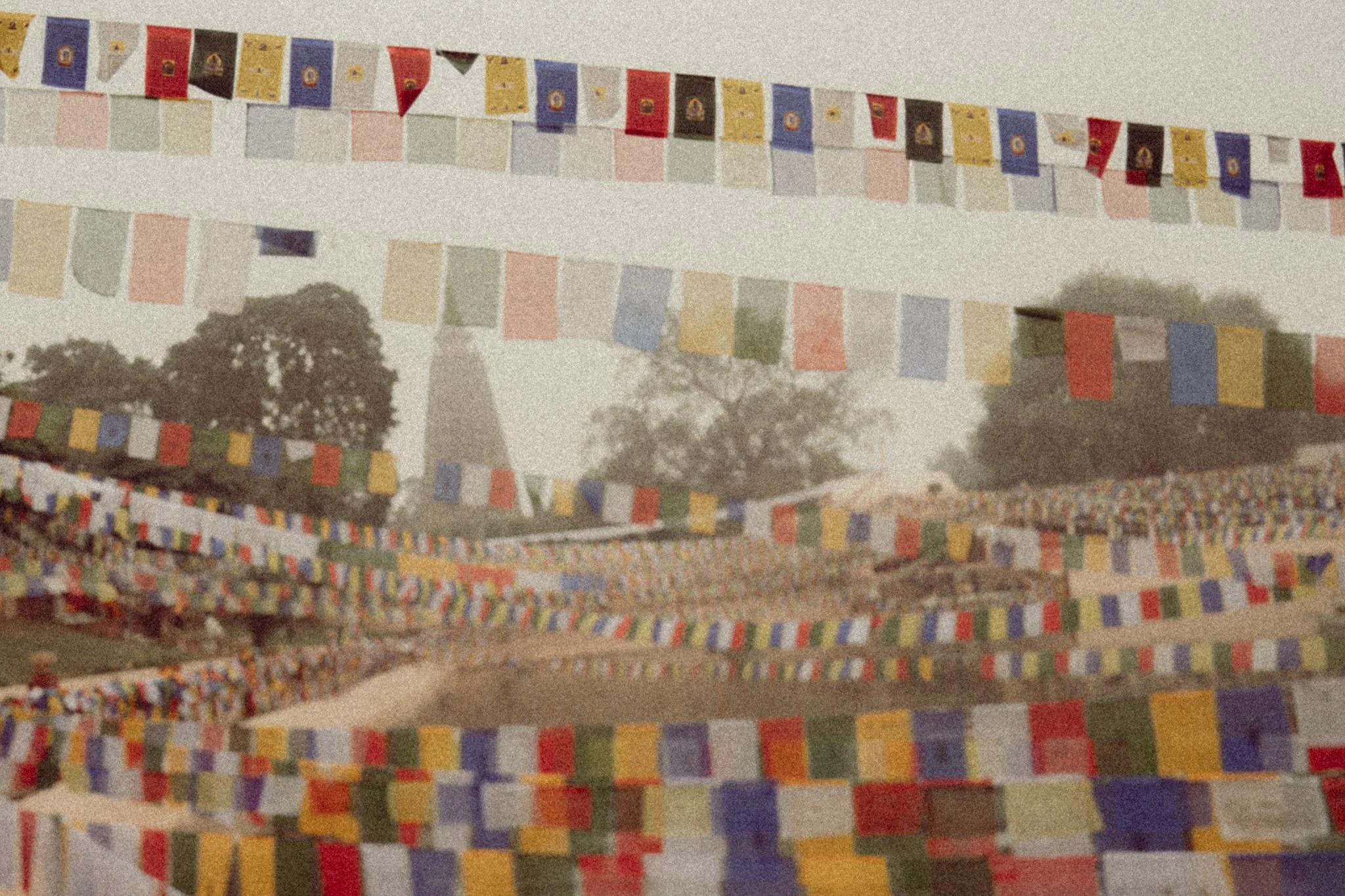
Buddhists and spiritual seekers flood to Bodh Gaya each day to practice by the bodhi tree. A beginning between beginnings. The place where Buddha attained enlightenment over 2,500 years ago.
Echoes circle the trunk carrying chants and mantras in different tongues. Together, they produce an emotive trance.
A space where generations come to purify, something sits in the air. A palpable mystery between now and history. It softens the body. The Bodh Gaya rush fades away. The sounds of crowds, merchants, and horns meet devotees, offerings, and prayer flags.
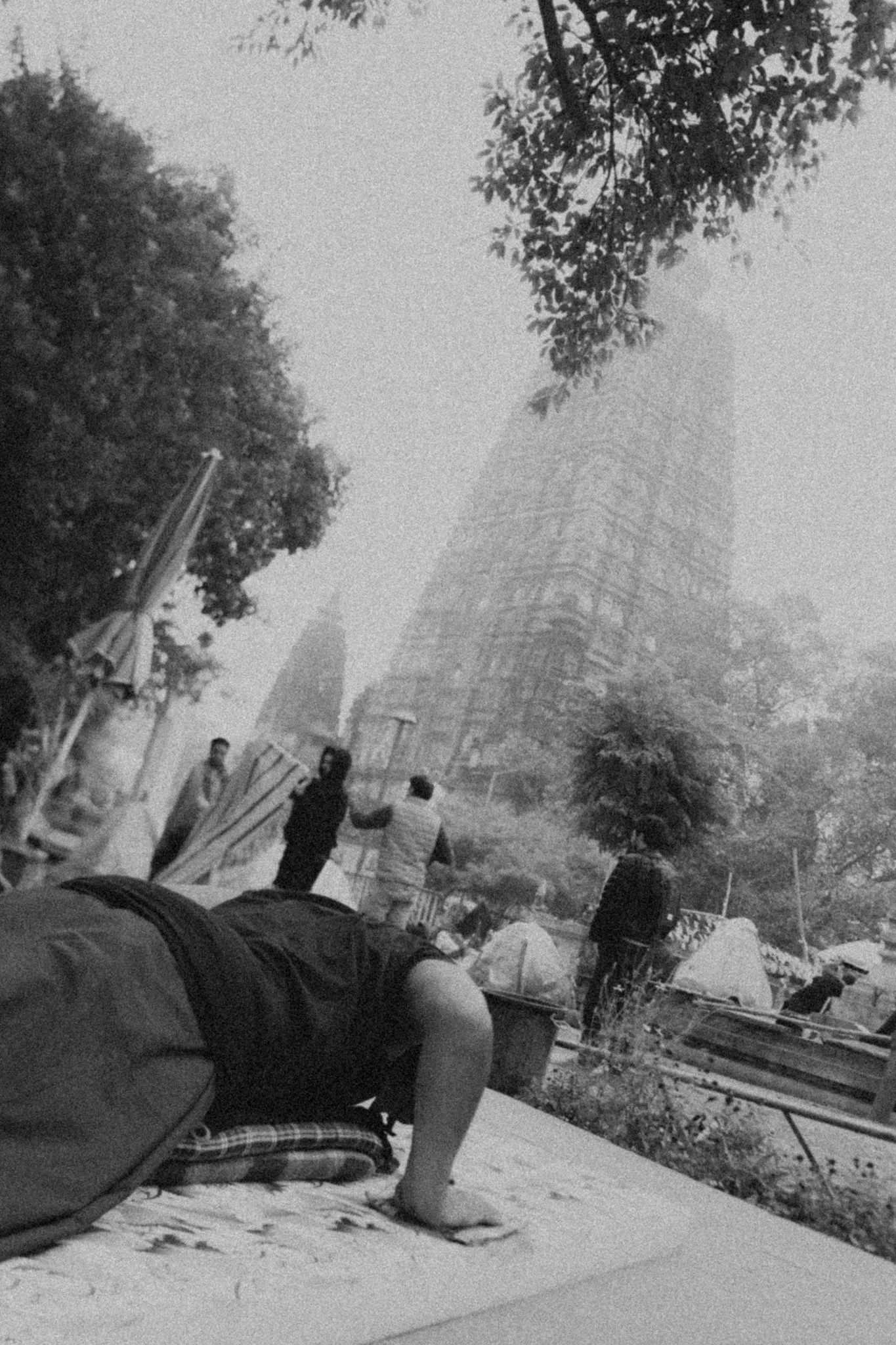
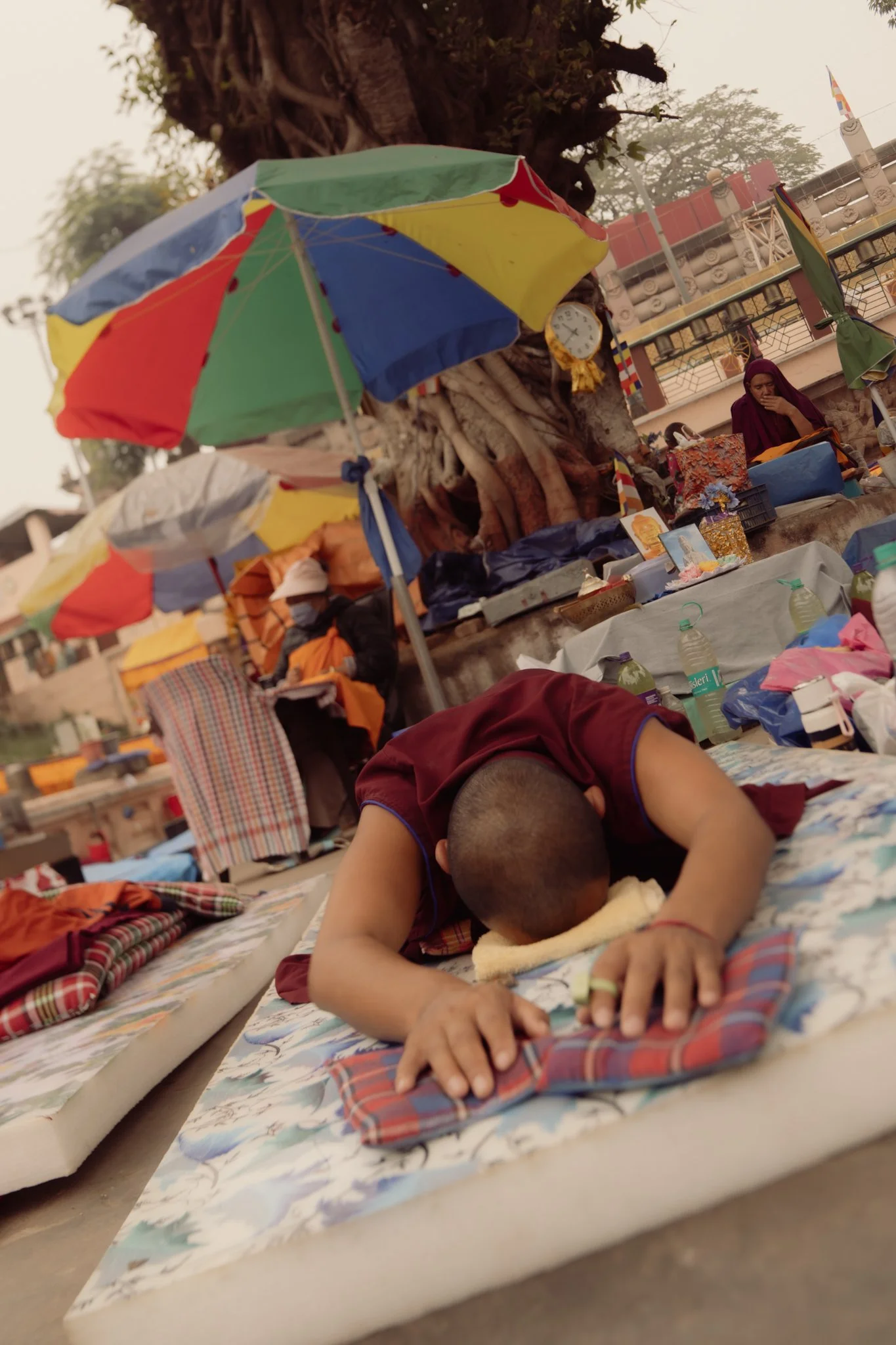
All buddhist lineages are together in one place. Amongst them, the Tibetans’ prostrations catch attention.
The physical movement draws similarities to a burpee. A full body exercise with conservative clothing and an indian climate. People practice the purification on a bed or by kora, circumambulating clockwise the sacred site.
It’s common practice to do 100,000. Completing 1,000 a day means people dedicate over three months to being in Bodh Gaya.
First sight of it is intense. Repetitive bowing and placing the forehead on the ground under physical stress.
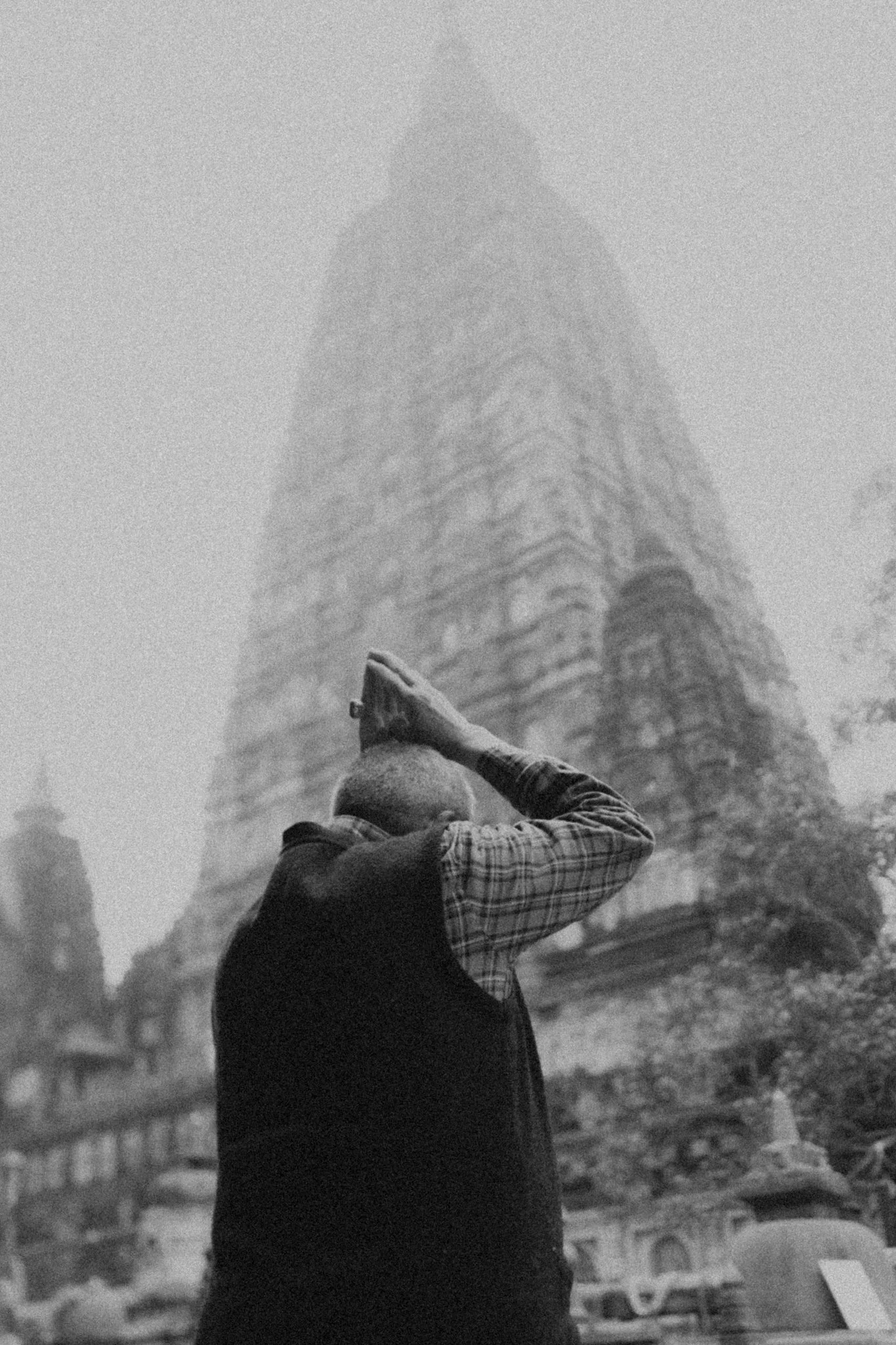
It strikes a question of why. What’s the motivation? Deeper listening reveals its purposes. One resonating with me is reducing the ego.
A letting go of the self-cherishing for something else. Allowing that something to be big. A message that, for a moment, can be greater than our own problems, urges, and afflictions.
What makes me ‘me’?
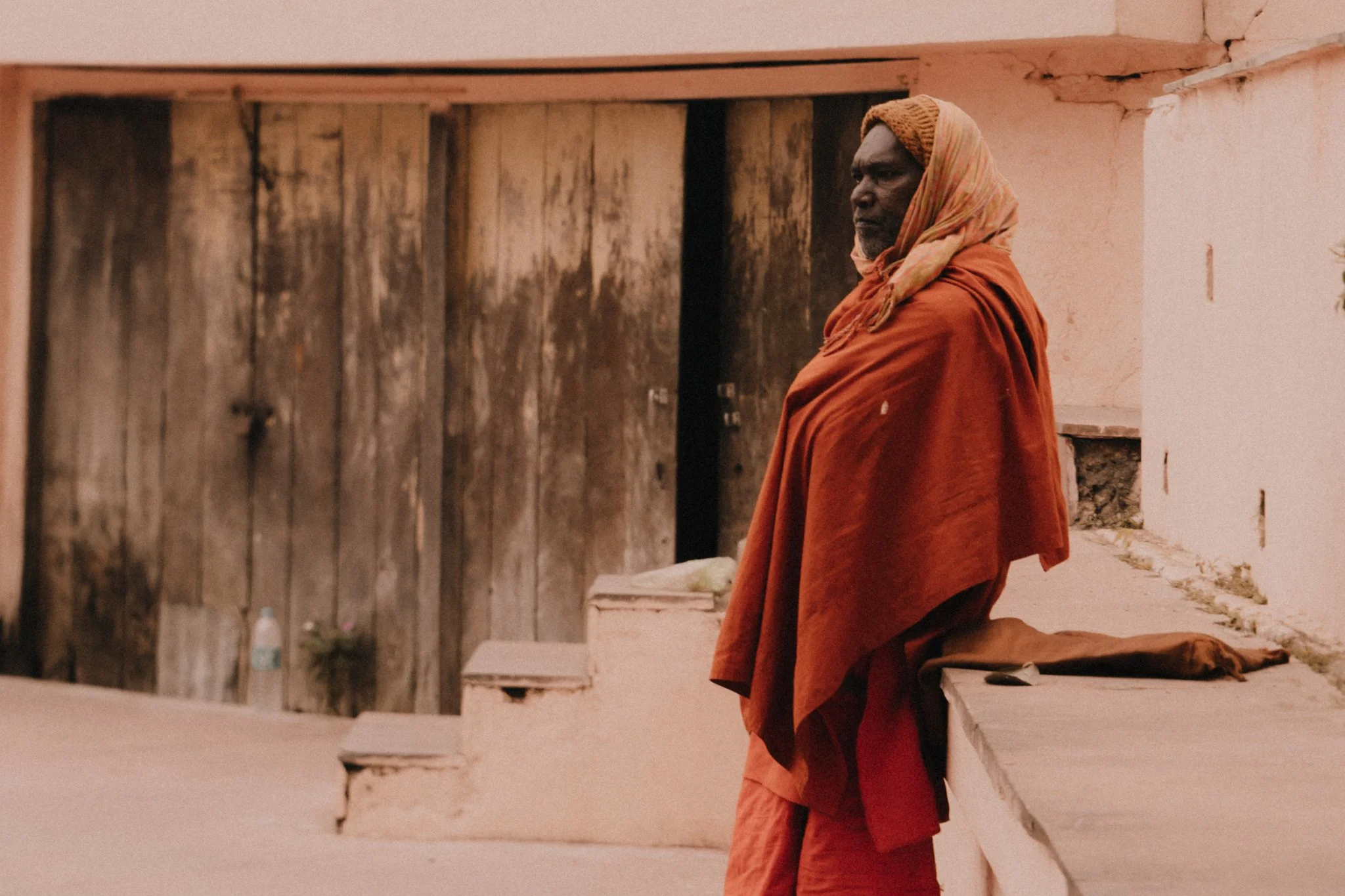
“We are not ‘the one’ but one of many ones.” - Robert Thurman
A challenging concept in Buddhism to grasp (and then let go of) is emptiness.
The dismantling of the ‘I’. Me. This independent self I built and claim to be doesn’t exist on its own. My thoughts, emotions, beliefs, and actions are products of their environment.
Environments change, then so can I and others.
It’s difficult to apply this in conflict. To zoom out and realise everyone is victims of victims. Hurt people hurt people. This flow of anger and ignorance can connect with an equally powerful stream of love and compassion.
The Man from the Moon
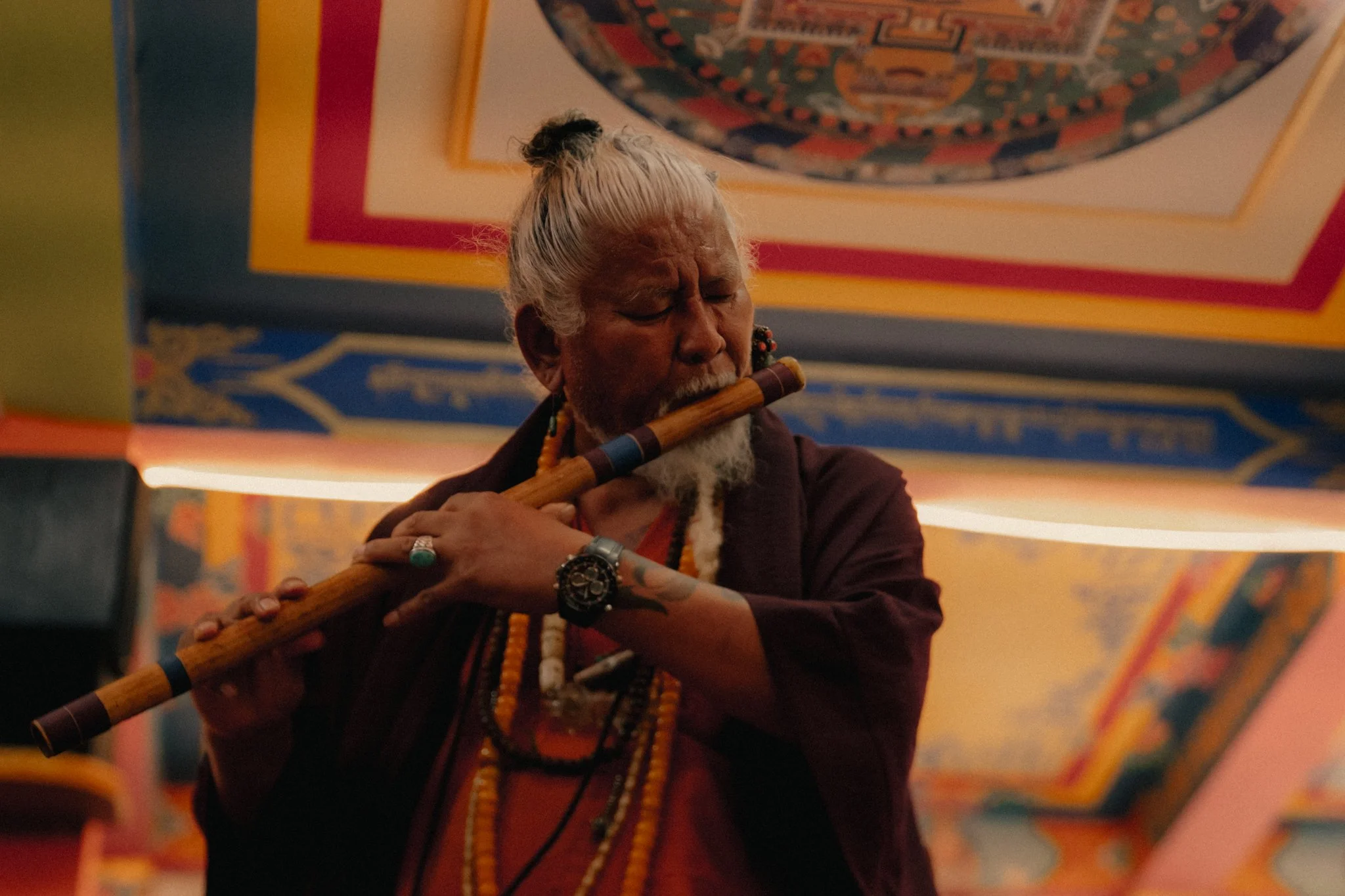
Namling’s presence attracts eyes. Holding a handful of instruments as he arrived at Root Institute, I asked him where he was from.
‘I’m from the moon.’
Fitting. It feels like he’s from a far away place, yet there’s a familiarity. A relatability of his luminosity from different angles, perspectives.
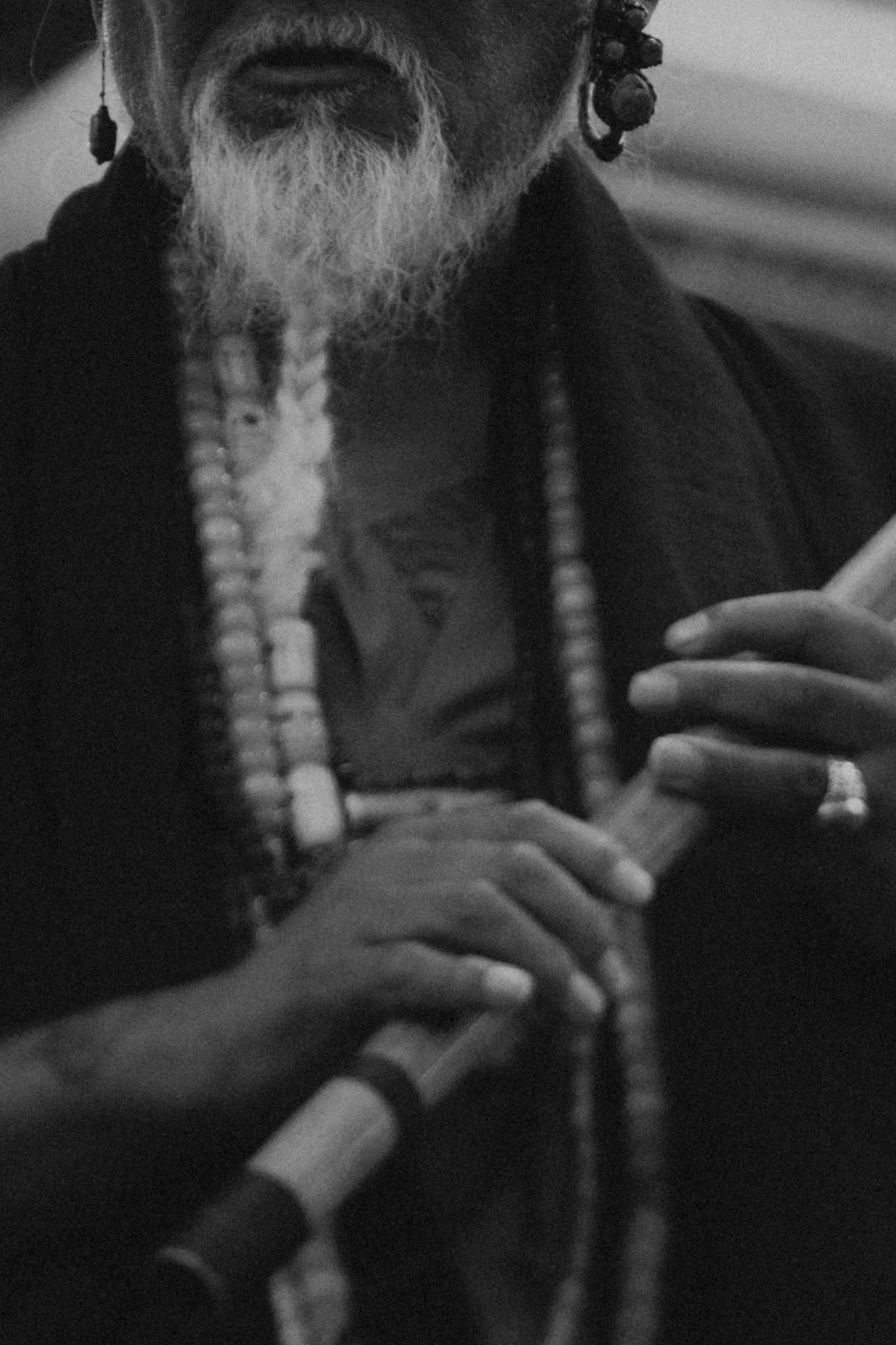
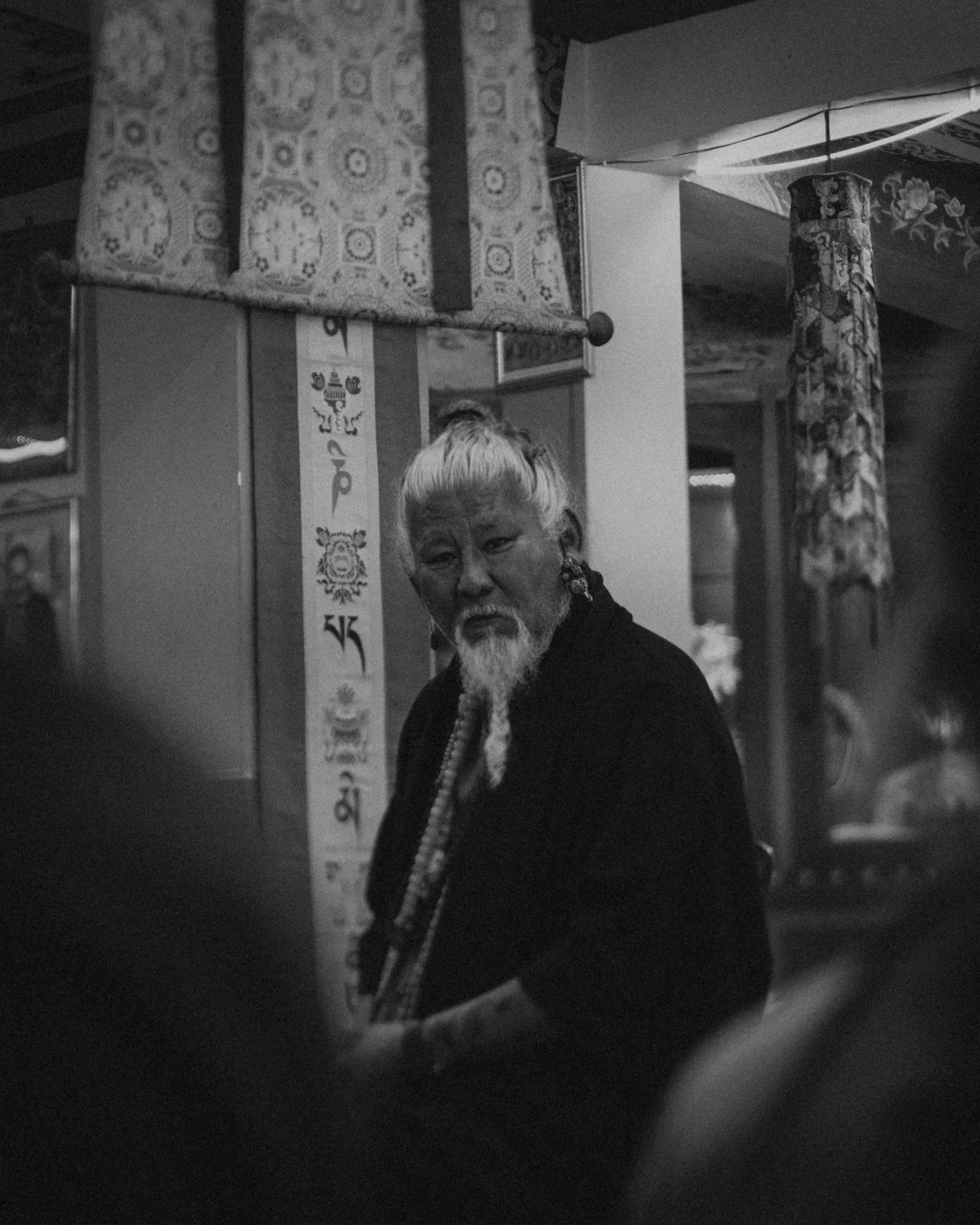
A Tibetan multi-instrumentalist, he mixes traditional Himalayan folk with rock and roll. Without singing lessons his voice is raw, powerful. His heart-filled performances have played for the Dalai Lama countless times.
‘The public wants to hear your nature. When you are performing people love who you are.’
Rugged up in the Bodh Gaya winter, his rolled sleeves indicated a body full of tattoos. He lifted his shirt to reveal 169 flames on his body. Each flame representing the 169 Tibetans setting themselves on fire in protest of their oppression from Chinese authorities.
Our time together was short but impactful. I managed to capture a couple clips of his offerings in the gompa.